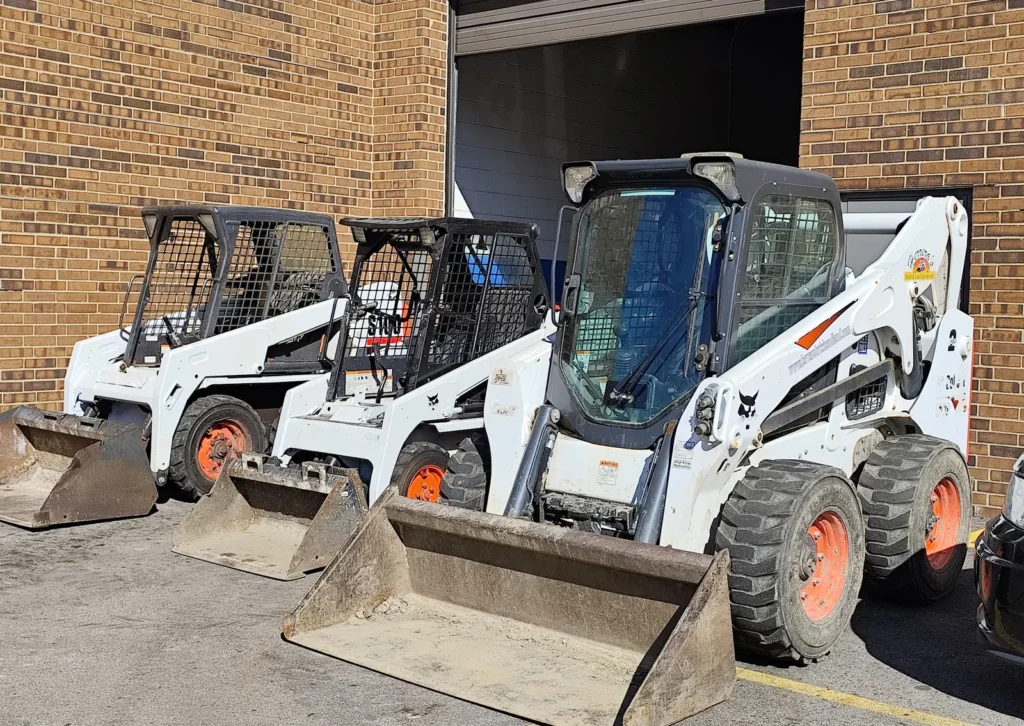
Chicagoland winters are hard on machines. Overnight lows below zero, wet snow, and road salt hit every skid steer, loader, forklift, and excavator that works outside. For many of our customers, winter is also the busiest season. Snow removal crews need their track loaders ready before the first storm, and warehouses can’t afford a forklift that won’t start on a cold morning.
Most winter breakdowns we get called for could have been prevented with an hour of work in the fall. Here is the checklist we use when we prepare equipment for winter, and the habits that keep machines running until spring.
Why Winter Is So Hard on Heavy Equipment
Cold changes how every system on a machine behaves:
- Diesel fuel gels. Untreated No. 2 diesel starts to cloud and thicken as temperatures drop. Wax plugs fuel filters and the engine starves.
- Batteries lose power. A battery has much less cranking power on a frozen morning, right when a cold engine needs the most.
- Oil and hydraulic fluid thicken. Thick oil flows slowly to bearings on start-up, and cold hydraulic oil can starve a pump.
- Water freezes where you don’t want it. Condensation in fuel tanks, water in hydraulic oil, and wet mud packed into the undercarriage all freeze solid.
- Road salt eats metal and wiring. Salt spray gets into connectors, pins, and frames and speeds up corrosion all winter long.
The Pre-Winter Checklist
1. Switch to winter fuel and replace the fuel filters
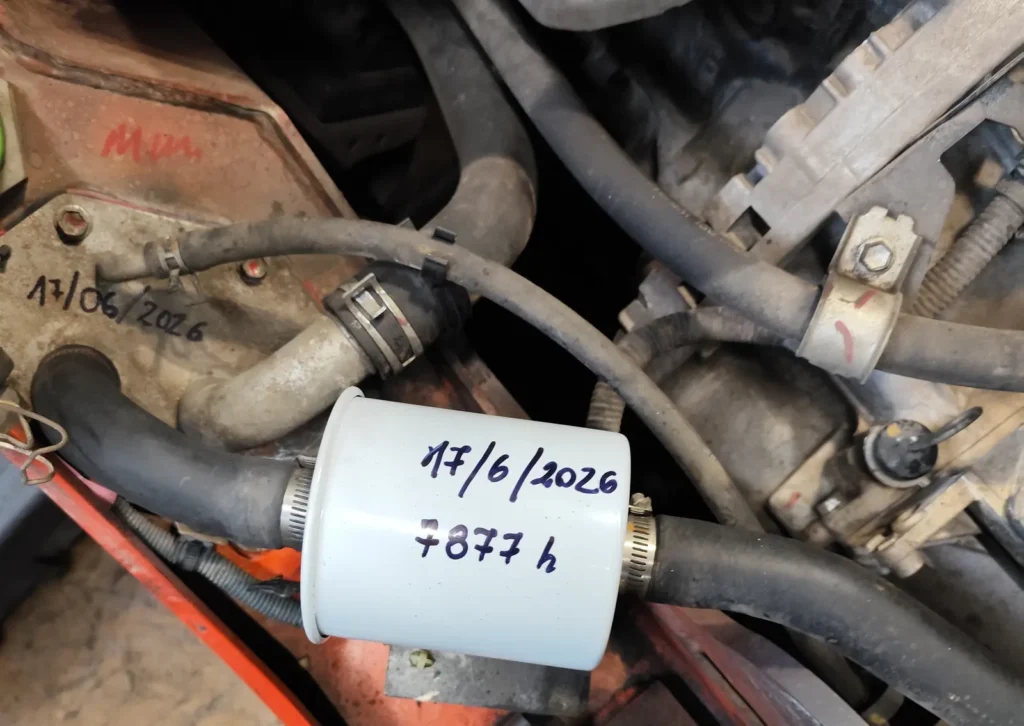
Make sure the fuel in your tanks is a winter blend or treated with an anti-gel additive before the first hard freeze. Replace the fuel filters and drain the water separator. A fresh filter costs far less than a service call to a machine that gelled up on a job site.
2. Test the batteries and clean the connections
Load test every battery, not just check the voltage. A battery that barely starts the machine in October will not start it in January. Clean corroded terminals, tighten the cables, and check the ground connections. Most “dead machine” calls on cold mornings come down to the battery or a bad ground.
3. Check glow plugs, grid heaters, and block heaters
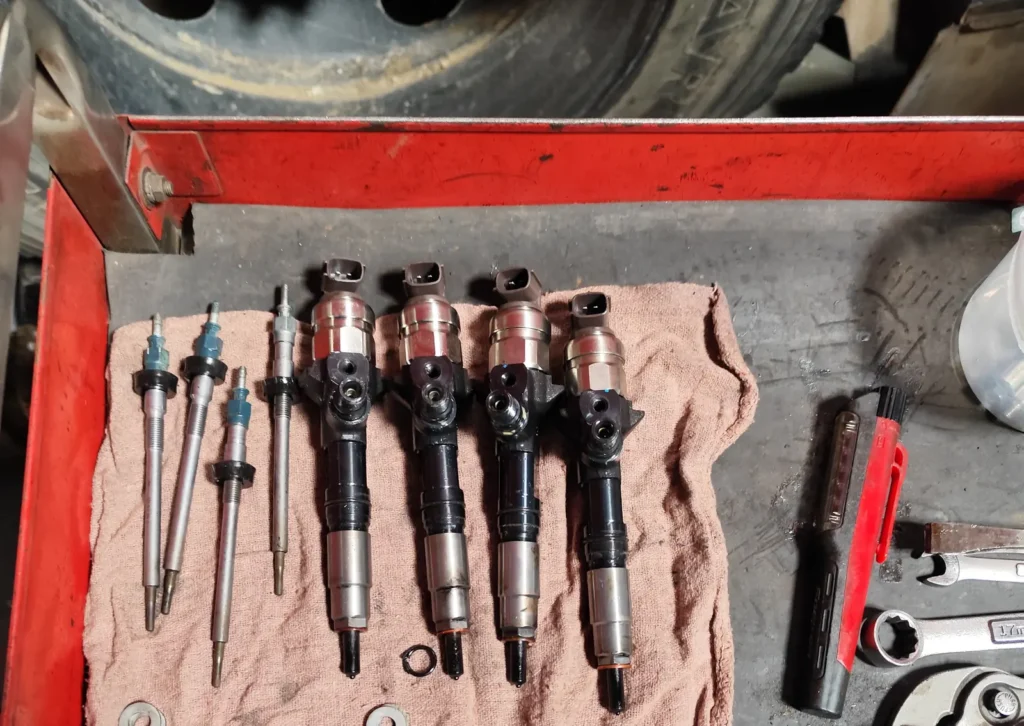
Diesel engines rely on glow plugs or an intake grid heater to start in the cold. One failed glow plug can turn a normal start into long cranking and white smoke. If your machine has a block heater, plug it in and make sure it actually warms the engine. If hard starts are already a problem, see our diesel engine repair service.
4. Use the right engine oil and test the coolant
Use the oil viscosity your manufacturer recommends for cold weather. If an oil change is due in the next few months, do it before winter. Test the coolant with a refractometer or test strips. A proper 50/50 antifreeze mix protects to about -34°F, but a mix diluted with water may freeze much sooner and crack a block or a radiator.
5. Inspect hydraulic oil, hoses, and cylinders
Check the hydraulic oil level and look at its color. Milky oil means water got in, and that water can freeze or damage the pump. Look for cracked or rubbing hoses, because rubber gets stiff in the cold and weak hoses tend to burst on the first cold start. Wipe cylinder rods clean so ice and grit don’t tear the seals. If the machine is already slow or weak, our hydraulic and hydrostatic repair page explains what we check.
6. Get the undercarriage ready
Mud packed into the undercarriage freezes overnight and can lock rollers or pull a track off the next morning. Clean it out before parking. Check track tension and look for cracked lugs or exposed steel cords on rubber tracks, because cold rubber cracks faster. For track loaders and mini excavators headed for snow work, see our undercarriage and track repair service.
7. Protect the machine from road salt
Wash salt off machines regularly, especially those that work on plowed lots and roads. Pay attention to electrical connectors, because salt and moisture cause many of the strange electrical faults we see in winter. A little dielectric grease on connectors goes a long way.
8. Grease every fitting
Fresh grease pushes out water that would otherwise freeze in pins and bushings. Use a grease rated for low temperatures and grease every fitting before the season, then stay on schedule all winter.
Cold-Weather Habits That Prevent Repairs
- Warm it up. Let the engine idle until the temperature gauge starts to move before putting it under load.
- Cycle the hydraulics gently. Work every function slowly a few times so warm oil reaches the pump, valves, and cylinders.
- Don’t rev a cold engine. High RPM on cold oil wears bearings and turbos fast.
- Keep the fuel tank full. A full tank leaves less room for condensation and water in the fuel.
- Park smart. Park indoors or out of the wind when you can, and plug in block heaters overnight.
When to Call a Mechanic
Some winter problems don’t fix themselves when the weather warms up. Call a mechanic if you see:
- Long cranking, white smoke, or a machine that won’t start even with a good battery
- Hydraulics that stay slow or noisy after the machine is warmed up
- Warning lights or fault codes that keep coming back
- Fresh oil, fuel, or coolant leaks under the machine
- A track that keeps coming off or a machine that pulls to one side
If you’re not sure what’s causing the problem, our heavy machinery diagnostics find the fault on your site before parts get ordered.
Get Your Machines Ready Before the First Storm
Masterman Heavy Equipment Service LLC works on skid steers, compact track loaders, excavators, forklifts, and telehandlers across Schaumburg and Chicagoland. We come to your job site, yard, or warehouse, and bigger repairs go to our shop in Wood Dale. Call or text Robert at (773) 501-5077, or send a message through our contact page.